
Reading time: 5 minutes
You’ve probably heard the term sustainability, but do you know what it really means? Since the 1980s, this concept has been at the heart of global discussions about the future of our planet. Discover its history, challenges, and how each of us can take action to preserve Earth’s resources.
Context and Challenges
The Origins of Sustainability
The term sustainability gained prominence in the 1980s, as scientists warned governments about the impacts of mass industrialization. While industrialization began in the 19th century, it wasn’t until the post-war era of the 1970s that its scale triggered global awareness.
- 1972: The first Earth Summit in Stockholm led to the creation of the United Nations Environment Programme (UNEP). A landmark declaration stated:
“Every year, we must not consume more than the planet can produce. We must strive for social and economic equity while maintaining sustainable growth.”
- 1987: The Brundtland Report (World Commission on Environment and Development) defined sustainability as:
“Meeting the needs of the present without compromising the ability of future generations to meet their own needs.”
Progress and Ongoing Challenges
Subsequently, various countries established ministries of the environment and enacted new laws on pollution, waste management, and species protection. Labels and certifications were created, and innovation led to the discovery of new renewable energy sources (wind power, solar power, etc.). The topic also became more widely discussed in households, and major national awareness campaigns were broadcast on television.
However, despite this progress, global CO₂ emissions have risen by 60% since the 1990s.
Two Visions of Sustainability
Weak Sustainability
This approach assumes that environmental damage can be offset by innovation and economic growth. For example, developing technologies to reduce pollution or increasing resource production.
Strong Sustainability
Here, the priority is to stay within planetary boundaries. This means preserving ecosystems and natural resources, even if it slows economic growth.
Planetary Boundaries
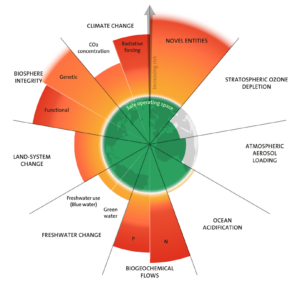
7 of these 9 boundaries have been exceeded
Planetary boundaries define the critical thresholds that humanity must not exceed to avoid irreversible damage. These boundaries include:
- Climate change
- Biosphere integrity
- Land-system change
- Freshwater use
- Biogeochemical flows (nitrogen, phosphorus)
- Novel entities (pollution, plastics)
- Ocean acidification
Today, 7 of these 9 boundaries have been exceeded. This means Earth is struggling to regenerate and balance human activity.
CO₂: The Key Driver of Climate Change
CO₂ is a natural greenhouse gas, but its excess in the atmosphere accelerates global warming. This leads to natural disasters (droughts, floods, hurricanes) and threatens biodiversity.
Did you know?
Every object or food item has a carbon footprint, which measures the amount of CO₂ emitted to produce it. Less CO₂ = less warming!
Sustainable Development Goals (SDGs)
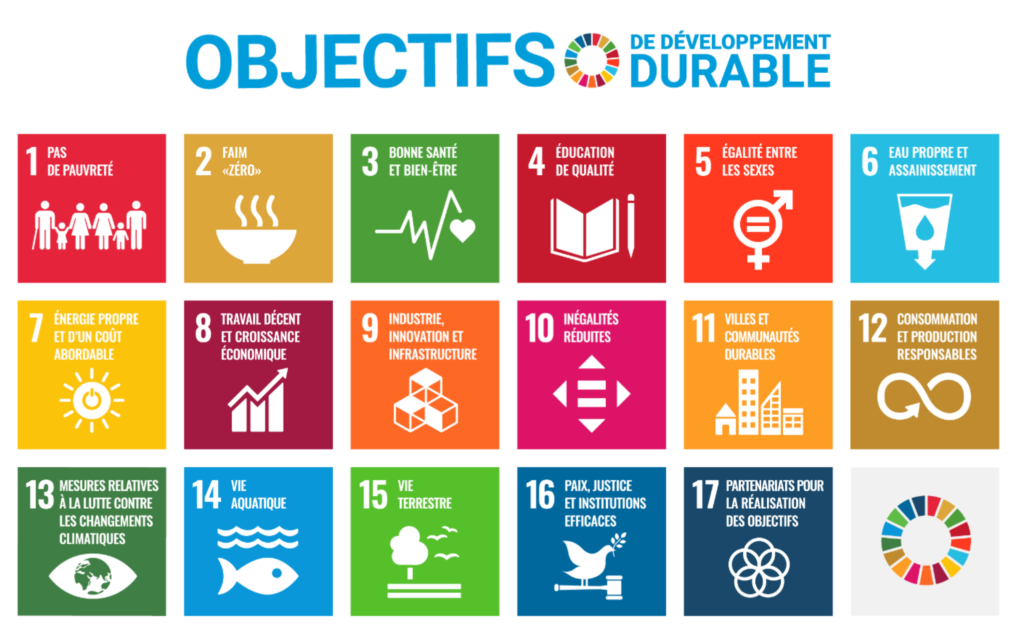
The Sustainable Development Goals (SDGs), adopted by the UN in 2015, are 17 universal goals aimed at ending poverty, protecting the planet, and ensuring prosperity for all by 2030.
They address key issues such as climate, education, equality, health, and responsible consumption, encouraging countries, businesses, and citizens to take coordinated action.
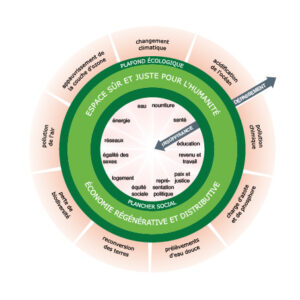
The Doughnut Economics Model: Finding Balance
Proposed by economist Kate Raworth, this model seeks to create an economy that:
- Stays within ecological limits (climate, biodiversity)
- Meets basic human needs (food, health, education)
All Is Not Lost: Let’s Act Together!
While the challenges are immense, every action counts. By changing our habits, we can create a ripple effect for the planet.
5 Simple Steps to Start: